


 China
 India
 Vietnam
 Thailand
 Taiwan
 UAE
 Israel
 Indonesia
 Turkey
 Italy
 Egypt
 Bangladesh
 Iran
 UK
 Algeria
 Tunisia
 Spain
 Malaysia
 Morocco
 Saudi Arabia
 Singapore
 Philippines
 China
 UAE
 Japan
 South Korea
 Taiwan
 United Kingdom
 Brazil


What Is Cargo Consolidation: How Consolidated Shipments Are Combined and When It Pays Off
If a shipment fills only half a container or a third of a truck, ordering dedicated transport for it isn’t cost-effective — you’d be paying for empty space no one uses. The solution is cargo consolidation. This means combining several shipments from different senders into a single joint dispatch, where each party only pays for the volume they actually use.
WestComTrans organizes consolidated shipments by sea, air, rail, and road, as well as multimodal schemes combining several transport types. Below is how consolidation works in practice, how it differs from a full container load, and what to consider when choosing a logistics partner.
What Is Cargo Consolidation in Simple Terms
Cargo consolidation means combining several shipments from different senders at a single warehouse into one transport unit: a container, air pallet, railcar, or truck. This combined shipment then travels as a single unit and is split among the recipients upon arrival.
There are two types of consolidation:
- Physical — different clients’ cargo is actually combined at the warehouse: it’s sorted, palletized, and loaded into one container or truck body.
- Virtual — shipments travel the same route on the same voyage but aren’t physically mixed, with documents for each shipment prepared separately.
In practice, physical consolidation is used more often — it delivers greater savings through joint packaging and loading.

Why Cargo Consolidation Is Needed: What Problems It Solves
Consolidation addresses specific business challenges that come up when working with small shipments:
- Unfavorable rates for small shipments. The minimum rate for a dedicated container or truck doesn’t change whether it’s 100% or 20% full. Consolidation splits this rate among several senders.
- Purchasing from multiple suppliers in the same region. Instead of a separate shipment from each factory or seller, all the shipments are brought to a single warehouse and sent out on one trip.
- Risk of damage to small shipments. A small package traveling alone is more likely to get damaged during transshipment. As part of a larger shipment, it’s secured together with the rest of the cargo on a pallet or inside a container.
- Customs clearance for each shipment separately. Ten small shipments mean ten transport documents, ten interactions with the carrier, and ten points where a delay could occur. A single transport document for the combined shipment simplifies logistics, even when the customs declaration for each recipient is still filed separately.
Consolidated shipments from China, Turkey, and other Asian countries remain one of the most in-demand delivery formats today, especially for small and medium businesses — this model allows them to regularly restock their range without tying up money in large, one-off shipments.
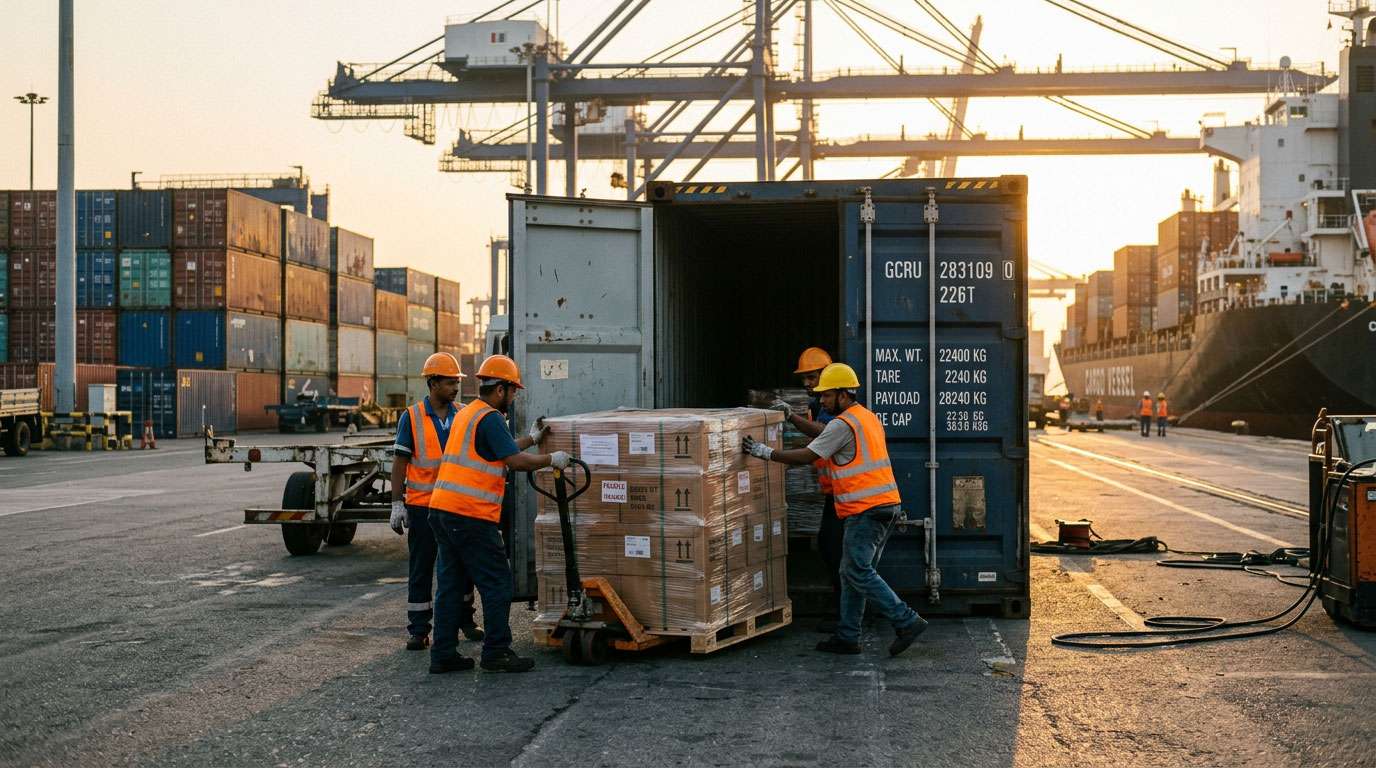
Consolidation (LCL) vs. Full Container Load (FCL): What’s the Difference
In sea and container shipping, these two formats are known by their English abbreviations: FCL (Full Container Load) — a full container load from a single sender, and LCL (Less than Container Load) — a partial load, i.e., consolidation.
| Parameter | FCL (Full Container Load) | Consolidation / LCL |
|---|---|---|
| Payment | For the entire container | Only for the volume used (cubic meters) |
| Departure time | Ships as soon as it’s loaded | Waits until a full shipment is formed at the warehouse |
| Cargo volume | A full container or more | From 1 cubic meter and up |
| Transport document | Separate for each shipment | Single document for the whole consolidated shipment, declaration by recipient |
| Best suited for | Large, one-off shipments | Regular small and medium shipments |
If the cargo volume doesn’t fill an entire container, truck, or railcar, paying for FCL means overpaying for unused space — and that’s where consolidation becomes the more sensible option.
How the Cargo Consolidation Process Works
- Receiving and verification. Cargo arrives at the consolidation warehouse, and staff check the quantity, weight, and compliance with accompanying documents.
- Sorting and labeling. Shipments are grouped by destination and product type, repackaged and labeled if needed.
- Building the consolidated shipment. Cargo compatible in terms of shipping conditions is combined onto pallets or loaded into a shared container/truck body.
- Document preparation. A single transport document (bill of lading, CMR, or manifest) is prepared for the entire shipment, while the customs declaration is generally filed separately for each recipient within the shipment.
- Transportation. The consolidated shipment is dispatched via the selected transport along the route.
- Deconsolidation. Upon arrival, the shipment is split at the destination warehouse, and each recipient collects their cargo.
Types of Cargo Consolidation
Besides the division into physical and virtual, consolidation is also classified by purpose:
- Warehouse consolidation — cargo is gathered at a regional or central warehouse, from which it’s distributed to recipients.
- Transport consolidation — goods are brought to an intermediate warehouse near a port, airport, or railway station for onward shipment.
- Multimodal consolidation — the most complex scheme: the shipment is reformed several times along the route as the mode of transport changes.
Consolidation by Type of International Shipping
Sea freight. LCL is the most common form of consolidation: a container is filled with shipments from several senders heading to the same destination port.
Air freight. Consolidated air cargo is combined at the warehouse of the departure airport and built into air pallets — a compromise between the speed of air delivery and the cost of a full load.
Rail freight. Shipments are combined into a consolidated railcar or container for rail dispatch — an option for medium and large volumes over long distances.
Road freight. Consolidated cargo in a truck is a standard format for deliveries between countries and regions where the volume doesn’t warrant a dedicated vehicle.
Multimodal schemes. Cargo may go through several stages of consolidation: for example, by sea to a port, then deconsolidation and reassembly for the rail or road leg to the final warehouse. This kind of scheme requires precise synchronization of timelines across all legs of the route.

Advantages and Limitations of Cargo Consolidation
Advantages:
- Payment only for the volume actually used, not for the entire container or truck body.
- Fuller transport utilization — fewer trips per unit of cargo shipped.
- A single transport document for the whole shipment instead of a separate document for each small consignment.
- Professional packaging and securing of cargo at the warehouse reduces the risk of damage during transshipment.
- The ability to ship small shipments without overpaying for empty space in a container.
Limitations:
- Longer dispatch times. The shipment waits at the warehouse until enough volume accumulates to load — anywhere from several days depending on the destination. Consolidation isn’t suited for urgent deliveries.
- Dependence on other parties in the shipment. The entire consolidated cargo travels in one container or vessel and clears customs as a single unit. If one recipient has a documentation issue, the entire container could physically be held at the border — even if the other declarations are in order. This risk is reduced by verifying each sender’s documents at the warehouse intake stage.
- Extra transshipment. Cargo passes through the consolidation warehouse — an additional loading/unloading point compared to direct shipment. This is offset by proper packaging and careful handling at the warehouse.
Who Cargo Consolidation Is Best Suited For
- Online stores and marketplace sellers — for regularly restocking their range with small shipments.
- Companies with multiple suppliers in the same region — combining purchases from different factories into one shipment.
- Businesses testing a new product or market — minimal logistics costs for a trial shipment.
- Manufacturers — delivering components and samples from several locations in a single shipment.
If the cargo volume on its own fills a container or truck, and timing is critical, it’s more cost-effective to order a full load (FCL) — in this case, consolidation would only add waiting time.
Customs Clearance for Consolidated Shipments
It’s important not to confuse two different documents. A single transport document — a bill of lading, CMR, or manifest — is issued for the entire consolidated shipment and accompanies it as a whole. The customs declaration, on the other hand, is usually filed separately for each shipment within the consolidated cargo — based on its actual recipient, with its own invoice, packing list, and HS code. Sometimes a broker uses a scheme with a single declaration for the entire cargo filed on behalf of the operator — but that’s a separate arrangement, not an automatic rule of consolidation.
Because all the shipments physically travel in the same container or vessel, a documentation issue with one recipient can hold up the entire cargo at the border — even if the declarations for the other shipments are correctly filed. This risk can be reduced at the shipment-building stage: the logistics company should verify each sender’s documents when the cargo is received at the consolidation warehouse, before it’s combined into a joint shipment. This is standard practice for a reliable operator that takes on full customs support for the shipment.
How to Choose a Cargo Consolidation Company
When choosing a logistics partner for consolidation, it makes sense to check:
- experience with both full loads (FCL) and consolidated shipments (LCL);
- availability of multimodal delivery — by sea, rail, road, and air;
- support at every stage: from cargo intake at the warehouse to customs clearance and delivery to the recipient;
- transparent pricing with no hidden fees;
- clear communication about timelines and cargo status through a single manager — this is valued just as much as the shipping cost itself these days;
- working with a single operator across the entire route — this eliminates inconsistencies between different contractors and keeps responsibility for the cargo clearly defined.
WestComTrans: Cargo Consolidation with Full Support
WestComTrans has been active in international logistics since 2014, specializing in customs clearance and container shipping. We organize consolidated shipments by sea, road, rail, and air, as well as multimodal routes with the optimal combination of transport types. We work with the seaports of Novorossiysk, St. Petersburg, and Vladivostok, as well as airport terminals.
Working with us, you get:
- a single operator for the entire route — no intermediaries and no fragmented accountability;
- full customs support for the shipment, including document verification at the shipment-building stage;
- door-to-door delivery with all related services arranged;
- timely updates at every stage of the shipment.

If you have any questions about the process of organizing container cargo transportation or would like to receive a consultation, feel free to contact us. We are ready to assist you at every stage of your cargo delivery!
WestComTrans – International Logistics.


