


 China
China India
India Vietnam
 Thailand
 Taiwan
 UAE
UAE Israel
 Indonesia
 Turkey
 Italy
Italy Egypt
Egypt Bangladesh
 Iran
Iran UK
UK Algeria
 Tunisia
 Spain
Spain Malaysia
 Morocco
 Saudi Arabia
 Singapore
 Philippines
 China
China UAE
UAE Japan
Japan South Korea
 Taiwan
 United Kingdom
 Brazil


Food Product Customs Clearance
We handle customs clearance and transport with temperature control maintained — from your request through to delivery at the recipient’s warehouse. Transport and customs handled under one roof, with no intermediaries.
✔ We work with perishables and temperature-sensitive cargo
✔ Multimodal transport: sea, road, rail, air
✔ Over 10 years in the market
✔ We work throughout Russia and the EAEU
Specify the email address to which we will send the cost calculation.
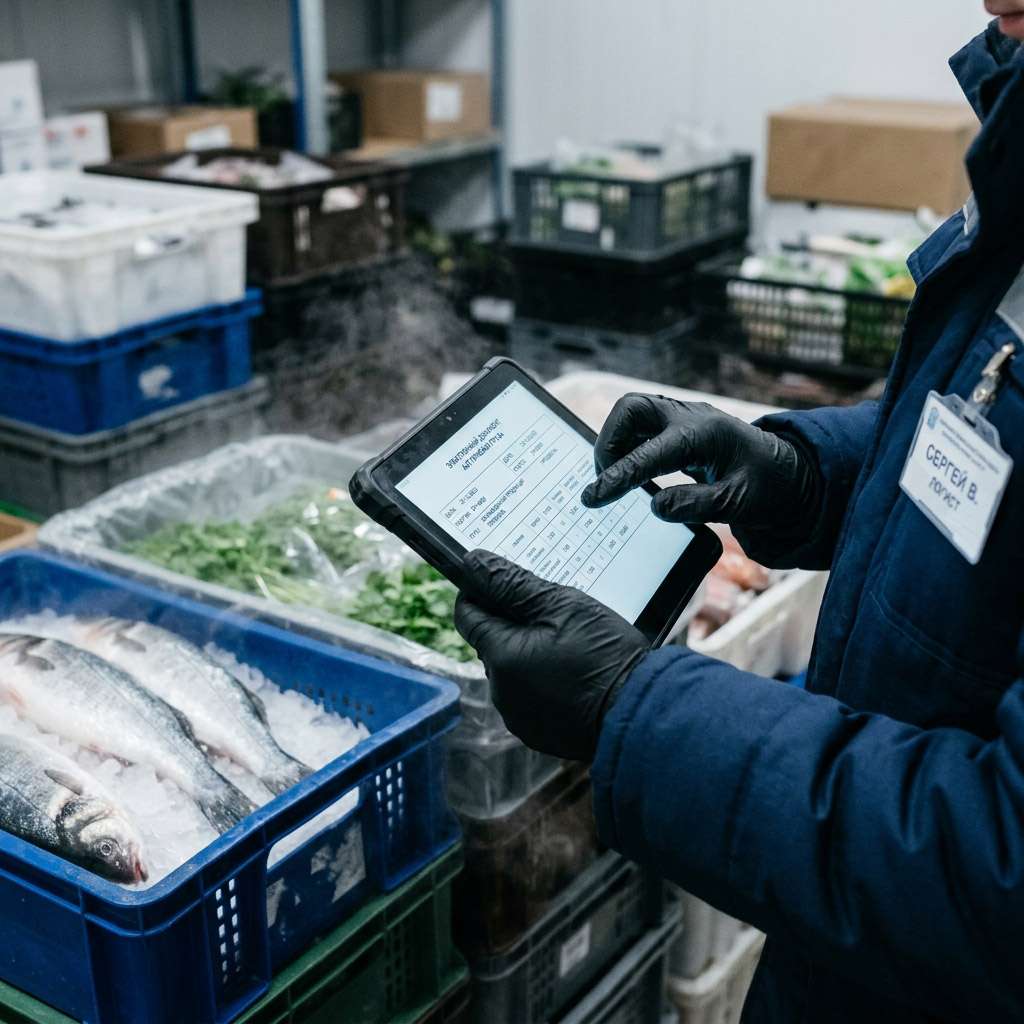
Food products are cargo that cannot tolerate delay: if held up at customs, a perishable shipment can spoil faster than a broker can gather a missing certificate. WestComTrans takes on the entire process — from selecting the HS code and preparing permits to phytosanitary and veterinary control and issuing the declaration. We work as a single contractor: we arrange transport with temperature control maintained while simultaneously handling customs clearance, so the cargo doesn’t sit idle at the “logistics-to-broker” handoff. We clear food products at customs posts throughout Russia, including via Novorossiysk.
What’s Included in Food Product Customs Clearance
Customs clearance of food products isn’t just about submitting a declaration. The service includes:
- determining the HS code and calculating customs payments (duty, VAT, fee);
- verifying that the set of documents matches the cargo;
- arranging phytosanitary and/or veterinary control;
- coordinating with Rosselkhoznadzor and Rospotrebnadzor;
- preparing and submitting the customs declaration (DT);
- handling inspections and obtaining release approval.
We manage the process from the initial consultation through to handing the cargo over at your warehouse — with no switching between different contractors.
What Food Categories We Handle
Food products are divided into several major groups, and the document package and type of control required depend on which group a product belongs to.
| Category | Examples | HS Group |
|---|---|---|
| Products of animal origin | meat, poultry, dairy, eggs, fish, seafood | 02–04 |
| Products of plant origin | vegetables, fruit, nuts, cereals, spices | 07–10, 12 |
| Processed products | canned goods, confectionery, sauces, beverages | 16, 19–21 |
| Food additives and ingredients | pectin, agar-agar, flavorings | 21 (partial) |
Rules differ within each group: fresh fruit and frozen meat go through different types of control and require different certificates, even when traveling in the same container.
Perishable and Temperature-Controlled Cargo
Speed is critical for chilled and frozen products: a shipment of fish delivered by sea can spoil if clearance is delayed by even a day. We agree on the transport temperature regime in advance — from +3…+15°C for fresh products to −18°C and below for frozen goods — and synchronize logistics with document submission so that the cargo doesn’t wait at the bonded warehouse (SVKh) longer than necessary.
Documents for Food Product Customs Clearance
The document package depends on the product category, but the basic package usually includes:
- foreign trade contract and invoice;
- packing list with weight and number of packages;
- transport waybill (CMR, bill of lading, air waybill, or rail waybill);
- phytosanitary certificate — for products of plant origin;
- veterinary certificate — for meat, dairy, fish, and other products of animal origin;
- declaration of conformity with TR TS 021/2011 and TR TS 022/2011 requirements;
- state registration certificate (SGR) — for baby food, sports nutrition, specialized food, dietary supplements, and mineral water;
- certificate of origin (Form CT-1 or Form A) — if claiming tariff preferences.
The list is refined for each specific shipment: we check the documents before the cargo arrives, so no time is lost at customs.
Certification, Labeling, and Permits
In addition to the customs declaration, food products must undergo conformity assessment against the technical regulations of the Customs Union. The main ones are TR TS 021/2011 “On the Safety of Food Products” and TR TS 022/2011 “Food Products in Terms of Their Labeling”; specific industry regulations apply to certain categories (fats and oils, juices, grain, specialized nutrition). Products that have passed certification are marked with the “EAC” symbol.
State registration (SGR) with Rospotrebnadzor is mandatory for a number of categories — this applies to baby and sports nutrition, dietary supplements, mineral water, and GMO products.
The “Chestny Znak” (Honest Sign) labeling system also needs to be taken into account separately: dairy products, packaged water, some grocery items, canned goods, and vegetable oils are subject to mandatory labeling. We check whether a specific product is subject to mandatory labeling before submitting the declaration — to avoid a rejection at the release stage.
Restrictions and Import Bans
Before shipping a batch to Russia, it’s important to check the country of origin: a food embargo is in effect against a number of countries (including EU member states, the USA, and the UK) and covers meat, dairy products, vegetables, fruit, salt, and several other categories. The list changes periodically, so we check current restrictions before clearing each shipment — this makes it possible to rule out the risk of confiscation or refusal of release in advance. You can check with a manager whether your product falls under current restrictions as early as the procurement planning stage.
Transport and Storage Specifics
Food products require not only the right documents, but also the correct transport conditions. Fresh products are transported at +3…+15°C, chilled products (dairy, meat) at 0…+4°C, and frozen products at −18°C and below. Different product categories are transported separately to avoid cross-contamination — for example, meat is not loaded together with vegetables and grains.
Since WestComTrans arranges transport and customs clearance simultaneously, the temperature regime is coordinated across the entire route — from loading at the supplier through to customs release — rather than being handed off between different contractors, each responsible only for their own segment.
Cost and Timelines for Customs Clearance
The cost depends on the type of procedure (import, export, transit), the number of product items in the declaration, the category of the foreign trade participant, and the urgency of clearance.
| Service | Cost |
|---|---|
| Declaration processing (import), up to 3–4 HS codes | from 25,000 RUB |
| Additional product item in the DT | from 10,000 RUB |
| HS code selection and permits | from 8,000 RUB |
| Expedited clearance of perishable cargo | upon request |
With a ready set of documents, clearance of a food shipment takes 1–2 business days; for perishables, expedited processing is possible — from 24 hours. We’ll calculate the exact cost and timeline once you send us the invoice and cargo description.
How Clearance Works — Stages of the Process
- Request and analysis. You send us the invoice, contract, and cargo description — we select the HS code and clarify the list of required documents.
- Document preparation. We gather and verify certificates, declarations of conformity, and permits — before the shipment arrives.
- Payment calculation. We determine the customs value and calculate duty, VAT, and fees.
- Declaration submission. We prepare the customs declaration (DT) and submit it to the customs authority.
- Control and inspection. We support phytosanitary/veterinary control, and inspections if required.
- Release and delivery. After release, we arrange delivery of the cargo to your warehouse — using our own transport, with no intermediaries.
Why Clients Choose Us
- Over 10 years in the market of international logistics and customs clearance.
- One contractor for the entire route: transport (sea, road, rail, air, multimodal) and customs clearance — with no disconnect between logistics and the broker.
- We work with perishables: we coordinate temperature control and expedited clearance rather than turning away complex cargo.
- Presence at key points of entry, including Novorossiysk.
- Our own transport — door-to-door delivery with no unnecessary intermediaries.
- Consultation and preliminary calculation — before signing the contract.
If you have any questions about the shipping container transportation process or would like to get advice, do not hesitate to contact us. We are ready to help you at every stage of your cargo delivery!
WestComTrans is an international logistics company.
COST OPTIMIZATION

Optimization of clearance and freight costs

Savings on terminal services

Adjustment of customs value

Optimization of final costs
Specify the email address to which we will send the cost calculation
SERVICE

24/7 communication with manager

Deferred payment

We work with and without VAT

Electronic document flow

Correspondence with sender

No hidden fees

Cargo insurance

Full support from purchase to delivery
Specify the email address to which we will send the cost calculation
WE ARE ALREADY TRUSTED


REVIEW


Ответы на частые вопросы
The basic package includes the contract, invoice, packing list, transport waybill, phytosanitary or veterinary certificate, and a TR TS declaration of conformity. The exact list depends on the product category.
With a complete document package — from 24 hours. We arrange expedited submission in advance for cargo with a limited shelf life.
Generally yes, if raw materials of animal origin are part of the composition. The exact requirement depends on the degree of processing and the HS code.
The cost depends on the number of items in the declaration, the category of the foreign trade participant, and urgency. Send us the invoice — we’ll calculate the exact amount.


