


 China
 India
 Vietnam
 Thailand
 Taiwan
 UAE
 Israel
 Indonesia
 Turkey
 Italy
 Egypt
 Bangladesh
 Iran
 UK
 Algeria
 Tunisia
 Spain
 Malaysia
 Morocco
 Saudi Arabia
 Singapore
 Philippines
 China
 UAE
 Japan
 South Korea
 Taiwan
 United Kingdom
 Brazil


HS Code Explained: Structure and How to Determine It
Here’s the translation:
If you’ve ever handled a foreign trade transaction — export, import, customs clearance of a container or a consolidated shipment — you’ve definitely run into the requirement to provide an HS code. This isn’t a box-ticking formality: it determines the customs duty and VAT rate, whether the product needs a certificate or license, and ultimately, how many days the cargo sits at the border. Let’s break down what an HS code is in plain terms, how its structure works, and how to determine it for a specific product — on your own or with the help of customs clearance specialists.
What Is an HS Code: Definition and Significance
HS code is the Commodity Nomenclature of Foreign Economic Activity of the Eurasian Economic Union. It’s a unified classifier that assigns a unique numeric code to every product crossing the EAEU border (Russia, Belarus, Kazakhstan, Armenia, Kyrgyzstan). The EAEU HS code is an extended version of the Harmonized Commodity Description and Coding System (HS) used by the World Customs Organization. That’s why the first 6 digits of the code are the same across most countries in the world, while the following digits provide more precise detail — we’ll look at exactly where each of these comes from a bit further below.
The code is needed to:
- calculate customs duty, VAT, and excise taxes;
- determine whether certificates, declarations of conformity, or licenses are required;
- understand whether the product falls under bans, quotas, or mandatory labeling;
- maintain foreign trade statistics.

Example: Breaking Down an HS Code
Let’s take a real code, 1512 11 910 9 — crude (unrefined) sunflower oil, one of the typical export goods:
- 15 — Group “Animal or vegetable fats and oils”
- 1512 — Heading “Sunflower-seed, safflower or cotton-seed oil and their fractions”
- 1512 11 — Subheading “crude oil”
- 1512 11 910 — Sub-subheading “other” (i.e., not for technical or industrial use)
- 1512 11 910 9 — the ten-digit code: oil not packaged in primary packaging of 10 liters or less (this exact code applies to bulk/barrel shipments; for bottling in containers up to 10 liters, the code would be 1512 11 910 1)
As you can see, the last digit here doesn’t reflect the product’s own properties, but rather the packaging method — this also affects the applicable duty rate and labeling requirements.

What an HS Code Consists Of: Structure and Classification Levels
Beyond the 10-digit code itself, the HS code system has a broader hierarchy — this is what makes up the entire classification system:
| Level | Number of Digits | What It Shows | Example |
|---|---|---|---|
| Section | — (21 sections total) | Industry or sector of industry | Section III — fats and oils |
| Group (Chapter) | 2 | Material, function, or degree of processing of the product |
15 — fats and oils |
| Heading | 4 | Specific product category | 1512 — sunflower oil |
| Subheading | 6 | Refinement by properties | 1512 11 — crude oil |
| Sub-subheading | 10 | Full code for the declaration | 1512 11 910 9 |
The nomenclature has 21 sections and 99 numbered product groups in total, but only 96 are actually in use — three numbers (77, 98, and 99) are reserved for future and national needs. Section and group titles are provided for convenience only — determining the correct code requires referring to the exact wording of the headings and the notes to the sections and groups, not the general section title.
There’s another nuance rarely explained: not all 10 digits of the code are “Russian.” The first 6 digits belong to the international Harmonized System, the 7th and 8th are a Combined Nomenclature-level refinement (originally a European practice, inherited through the CIS HS code), the 9th reflects the former CIS HS code level, and only the 10th digit is the EAEU’s own refinement. That’s why the first 6 digits of the code for the same product match across most countries’ declarations worldwide, and discrepancies only begin from the 7th digit onward.
A Bit of History: How the HS Code Came About
The HS code system isn’t a Russian invention. It’s based on the Harmonized System, which the USSR joined in 1988; the first version of the Soviet HS code was published in 1990. After the collapse of the USSR, CIS countries signed an agreement on a unified nomenclature in 1995, which took effect in 1997. From 2010, the Customs Union HS code was in force, and from 2017, the EAEU HS code. The World Harmonized System is updated roughly every 5 years (the 2007, 2012, 2017, and 2022 editions), and the EAEU incorporates each such update into its own nomenclature. The current edition is based on the 7th edition of the HS and was introduced by EEC Council Decision No. 80 of 14.09.2021, effective January 1, 2022; the document itself is regularly updated with targeted revisions — the latest technical revision took effect on January 30, 2026.
Why the HS Code Matters for International Shipping and Customs Clearance
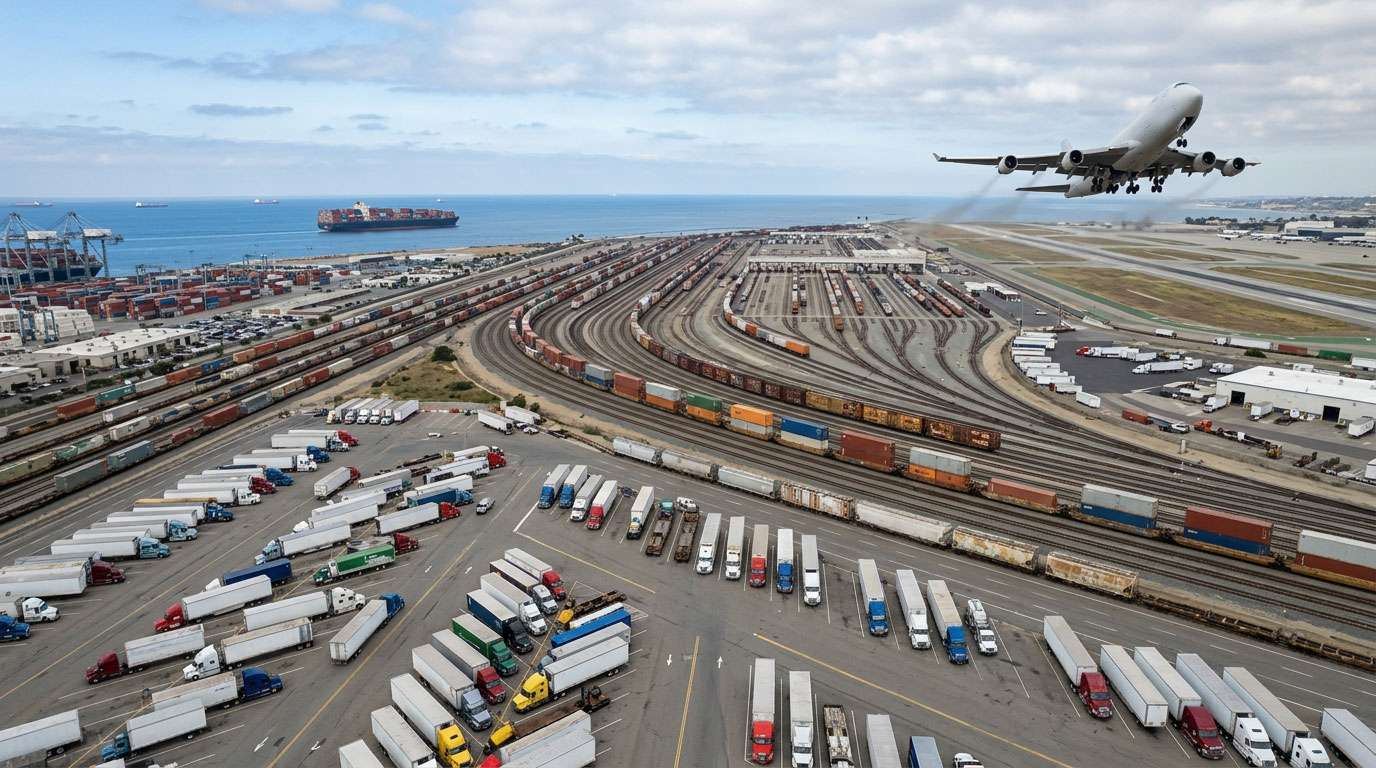
For a logistics company, the HS code isn’t abstract bureaucracy — it’s a concrete risk at every stage of the route. An incorrectly determined code affects cargo differently depending on the mode of transport:
- sea freight — the container may be held at the port for additional inspection while customs verifies that the code matches the actual product;
- road and rail freight — the cargo sits idle at the border crossing, accumulating storage and demurrage costs;
- air freight, where every hour counts — any hold-up over the code means missed delivery deadlines;
- multimodal transport — an error made on the first leg of the route usually surfaces only when switching transport modes or at the border, and correcting it after the fact is more difficult and costly.
Beyond timelines, the code directly determines:
- the duty and VAT rate;
- whether a certificate, declaration of conformity, or license is required;
- mandatory labeling and product traceability requirements;
- eligibility for benefits and preferences for the specific product category.
Who Assigns the HS Code and How It’s Verified
The code is determined by the declarant — the importer, exporter, or their representative (customs broker). The customs authority (FCS) verifies the accuracy of the classification: if the code raises doubts, the declarant will be asked to provide documents confirming the product’s composition, purpose, and characteristics.
Besides box 33 of the customs declaration, where the code is listed together with a letter marking (М — labeling not required, С — no restrictions apply, П — the product is subject to traceability, И — contains intellectual property), the code also appears in several other documents:
- box 1a of the invoice;
- the universal transfer document (UTD);
- the certificate of conformity (field 9) and declaration of conformity (field 5) — if the product is subject to mandatory certification.
How to Determine the HS Code for Your Product
There are four practical methods — from the simplest to the most reliable.
| Method | Timeframe | Cost | When to Use |
|---|---|---|---|
| Check the product documents (certificate, declaration of conformity) | Immediately | Free | If the product is already certified and the code is listed there |
| Determine it yourself | From a few hours to a few days | Free | For standard, well-described products |
| Through a customs representative (broker) | Usually 1–3 days, by arrangement | According to the broker’s price list | When speed matters and expertise in a specific product category is needed |
| FCS advance ruling | Up to 90 calendar days to decide, valid for 3 years | State fee of 5,000 ₽ per model/name | For new, complex, or disputed products — provides legal protection against fines |
When determining the code yourself, work from general to specific: first identify the appropriate group, then narrow it down to the heading and subheading, guided by the General Rules of Interpretation (GRI) and the explanatory notes to the HS code. The product description in the declaration should match the wording of the heading as closely as possible — this reduces the risk of additional questions from customs.
What Documents Are Needed to Confirm the Code
The set of documents depends on the type of product:
- for chemical products — composition, safety data sheet (SDS), certificates of analysis;
- for machinery and electronics — technical passport, specification, photographs;
- for light industry goods — material description, certificate of origin for the fabric;
- for food products — composition, nutritional value documents, the manufacturer’s quality standard.
The more detailed the product description at the time of filing the declaration, the lower the likelihood that customs will request clarifications after submission.
Classification Errors and Their Consequences
The most common mistakes when selecting a code:
- classifying based on the packaging’s appearance rather than the product’s actual function;
- overlooking that a product serves several functions at once (the primary function should be selected);
- incomplete description in the declaration — missing material, composition, voltage, etc.;
- inaccurate translation of the product description that doesn’t match HS code terminology.
The consequences depend on the severity of the violation:
| Violation | Liability |
|---|---|
| Providing inaccurate classification code information that affected the duty amount (Part 2, Art. 16.2 of the Russian Administrative Offenses Code) | For individuals and legal entities — a fine of 1/2 to 2 times the amount of unpaid duties and taxes, with or without confiscation of the goods; for officials — 10,000–20,000 ₽ |
| Non-compliance with import/export bans and restrictions (Art. 16.3 of the Russian Administrative Offenses Code) | For individuals — 1,000–2,500 ₽; for officials — 5,000–20,000 ₽; for legal entities — 50,000–300,000 ₽, with or without confiscation of the goods |
| Evasion of customs payments exceeding 3 million ₽ (large scale, Art. 194 of the Russian Criminal Code) | A fine of 100,000–500,000 ₽ or in the amount of income for 1–3 years, or forced labor or imprisonment of up to 2 years; for especially large amounts (over 9 million ₽) or aggravating circumstances — up to 6 years imprisonment |
If an error is found and corrected independently before a customs inspection begins — and there is no outstanding duty debt — a fine under Part 2, Art. 16.2 of the Administrative Offenses Code can usually be avoided. This rule is especially important to know right now: as of January 9, 2026, amendments to Art. 16.2 of the Administrative Offenses Code took effect (Federal Law No. 560-FZ of 29.12.2025), which clarified the procedure for this kind of voluntary exemption from liability and introduced separate, more lenient provisions for certain cases of non-declaration.
How WestComTrans Helps with Code Classification and Customs Clearance
We’ve been working in international logistics and customs clearance for over 10 years, and determining HS codes is part of our everyday work, not a one-off consultation. Here’s what we take on:
- we determine the code based on the product’s actual characteristics and FCS practice for similar headings;
- we prepare documents to confirm the code — from technical passports to composition certificates;
- we arrange customs clearance and the shipment itself — by sea, road, rail, or multimodally — under a single contract, with no intermediaries and no blurred accountability;
- when needed, we support obtaining an FCS advance ruling.
This way, you get more than just “the right number” on the declaration — you get assurance that your cargo won’t get stuck at the border over a disputed code.
Submit a request for customs clearance

If you have any questions about the process of organizing container cargo transportation or would like to receive a consultation, feel free to contact us. We are ready to assist you at every stage of your cargo delivery!
WestComTrans – International Logistics.


