


 China
China India
India Vietnam
 Thailand
 Taiwan
 UAE
UAE Israel
 Indonesia
 Turkey
 Italy
Italy Egypt
Egypt Bangladesh
 Iran
Iran UK
UK Algeria
 Tunisia
 Spain
Spain Malaysia
 Morocco
 Saudi Arabia
 Singapore
 Philippines
 China
China UAE
UAE Japan
Japan South Korea
 Taiwan
 United Kingdom
 Brazil


What Are Incoterms: International Delivery Rules in Simple Terms
Incoterms (International Commercial Terms) is a set of 11 standard trade terms developed by the International Chamber of Commerce (ICC). They determine which party to the deal — the seller or the buyer — pays for shipping, bears the risk of loss or damage to the cargo, and handles customs clearance at each stage of delivery.
Incoterms don’t replace the sales contract — they simply fix the allocation of responsibilities between the parties in a standard form recognized worldwide: a three-letter code such as FOB, CIF, or DAP. That’s exactly why these terms are used in virtually every international contract, regardless of cargo type or route.
At WestComTrans, we’ve handled international shipping and customs clearance for over 10 years, so we regularly help clients figure out which delivery term to choose for a specific route — whether by sea, air, rail, road, or a multimodal scheme.
Why Incoterms Are Needed and What Questions They Answer
When entering into a foreign trade contract, the parties always face three practical questions:
- Who pays for shipping — and up to which point on the route?
- Who bears the risk — at what point does responsibility for the cargo transfer from the seller to the buyer?
- Who arranges insurance and customs — on export and on import?
Without a common standard, each party would interpret the contract’s wording in their own way, which regularly led to disputes. Incoterms solves this problem: both parties use the same three-letter code and understand it in exactly the same way.
A Brief History of Incoterms
The first rules were published by the International Chamber of Commerce in 1936. The document has since been revised in 1953, 1967, 1976, and 1980, and starting in 1980, the ICC moved to a regular update cycle — once every 10 years: 1990, 2000, 2010, and finally the current edition, Incoterms 2020.
An important practical point: older editions aren’t automatically superseded — parties to a contract are free to apply Incoterms 2010 or even earlier versions. That’s why a contract should always specify not just the term itself, but also the edition year — for example, “FCA Incoterms 2020,” not just “FCA.”
Is there a new “Incoterms 2026” edition in effect in 2026? No. The International Chamber of Commerce has not released a new edition — as of 2026, the current document remains Incoterms 2020, which took effect on January 1, 2020. The next ICC revision is expected around 2030, in line with the established ten-year update cycle, but no official date has been announced yet. That’s why every contract signed in 2026 should reference “Incoterms 2020” specifically, rather than looking for a newer version that doesn’t exist.
What Incoterms Rules Cover and What They DON’T Cover
| Incoterms Covers | Incoterms Does NOT Cover |
|---|---|
| Allocation of shipping costs between the parties | Transfer of ownership of the goods |
| The point at which the risk of loss or damage to the cargo transfers | The method and timing of payment for the goods |
| Responsibilities for export/import customs clearance | Delivery deadlines — these must be specified separately |
| Who arranges loading, unloading, and insurance | Consequences of a party’s failure to fulfill obligations |
| — | Force majeure circumstances |
This is one of the most common mistakes when working with Incoterms: businesses confuse the transfer of ownership with the transfer of risk. These are different things, and Incoterms only governs the latter. The former needs to be spelled out separately in the contract.

Incoterms 2020 Groups — E, F, C, D
All 11 terms are divided into 4 groups, in order of increasing seller obligations:
| Group | The First Letter Stands For | Who Arranges the Main Transport | Point Where Risk Transfers |
|---|---|---|---|
| E | Departure | Buyer | At the seller’s premises |
| F | Free / main carriage unpaid | Buyer (hires the carrier themselves) | At the point of dispatch |
| C | Carriage paid | Seller | Usually at the moment the cargo is handed over to the first carrier |
| D | Delivered | Seller | At the point of destination |
In simple terms: the closer the letter is to the start of the alphabet, the more obligations and risks fall on the buyer. The closer it is to D, the more the seller is responsible for — right up to full turnkey delivery.
All 11 Incoterms 2020 Terms Explained
Terms for Any Mode of Transport
| Term | Meaning | Seller’s Obligations | Buyer’s Obligations |
|---|---|---|---|
| EXW | Ex Works | Hand over the goods at their own warehouse/factory | Pick up the cargo, handle export and import clearance, pay for the entire shipment |
| FCA | Free Carrier | Hand the cargo over to the buyer’s carrier, handle export clearance | Pay for transport from the handover point, handle import clearance |
| CPT | Carriage Paid To | Pay for transport to the specified point, handle export clearance | Handle import clearance, bear risk from the moment the cargo is handed to the carrier |
| CIP | Carriage and Insurance Paid To | Same as CPT, plus mandatory cargo insurance with expanded coverage — Institute Cargo Clauses (A), “all risks.” This is above the minimum threshold required for CIF (Institute Cargo Clauses (C), basic risks only) — this is the key difference between CIP and CIF in terms of cargo protection level | Handle import clearance |
| DAP | Delivered At Place | Deliver the cargo to the agreed point, bear risk and costs up to that point | Unload, pay import duties |
| DPU | Delivered at Place Unloaded | Deliver AND unload the cargo at the point of destination (the only term with this condition) | Handle import clearance |
| DDP | Delivered Duty Paid | Deliver the cargo, cleared through import customs, to the destination — the maximum level of seller obligation | Receive and unload the goods |
Terms for Sea and Inland Waterway Transport Only
| Term | Meaning | Seller’s Obligations | Buyer’s Obligations |
|---|---|---|---|
| FAS | Free Alongside Ship | Deliver the cargo alongside the ship at the port of dispatch | Load it onto the ship, handle import clearance, pay for the main transport |
| FOB | Free On Board | Load the goods onto the ship, handle export clearance | Pay freight, handle import clearance, bear risk from the moment of loading |
| CFR | Cost and Freight | Pay for transport to the port of destination, load the goods | Handle import clearance, unload; risk transfers from the moment of loading onto the ship |
| CIF | Cost, Insurance and Freight | Same as CFR, plus cargo insurance | Handle import clearance, unload |
Important: as of 2020, the term DAT (Delivered at Terminal) from the 2010 edition has been replaced by DPU — essentially the same condition, but with more flexible wording for the handover location (not necessarily a terminal, but any agreed unloading point).
How to Choose the Right Incoterm for Your Shipment
There’s no universal “correct” term — the choice depends on several factors:
- Mode of transport. FOB and CIF are often used for sea container shipping; CPT, CIP, DAP, and EXW are more common for air and rail shipping and multimodal schemes.
- Experience of the foreign trade participant. Newcomers find it easier to work with group D terms (DAP, DPU, DDP) — the seller takes on most of the organizational matters. Experienced importers more often choose EXW or FOB, to control the route and shipping cost themselves.
- Bank requirements for a letter of credit. Some banks require a specific type of transport document (for example, a bill of lading with an on-board notation), which directly affects the choice of term.
- Willingness to bear additional costs for flexibility. Group E and F terms are usually cheaper “on paper,” but shift the organization of transport, insurance, and customs onto the buyer — meaning additional hidden costs.
If you’re not sure which term is optimal for your route and cargo, this is a case where it’s cheaper to consult a logistics operator once than to overpay because of an incorrectly chosen basis.
Common Mistakes When Choosing Delivery Terms
- Stating the term without the edition year. “FOB” without specifying 2010 or 2020 formally allows for different interpretations of insurance conditions and the parties’ obligations.
- Using sea terms (FOB, CIF, CFR, FAS) for non-containerized or land transport — for example, road or rail delivery. These terms assume the cargo is handed over specifically on board a ship, and applying them in multimodal or land logistics creates legal uncertainty.
- Confusing the transfer of risk with the transfer of ownership. Incoterms only governs the former — the moment the cargo becomes the buyer’s “problem.” The moment the buyer officially becomes the owner of the goods needs to be spelled out separately in the contract.
- Missing a separate insurance clause where Incoterms doesn’t require one. Of all 11 terms, mandatory cargo insurance by the seller is only required under CIF and CIP — in every other case, the parties must arrange insurance themselves.
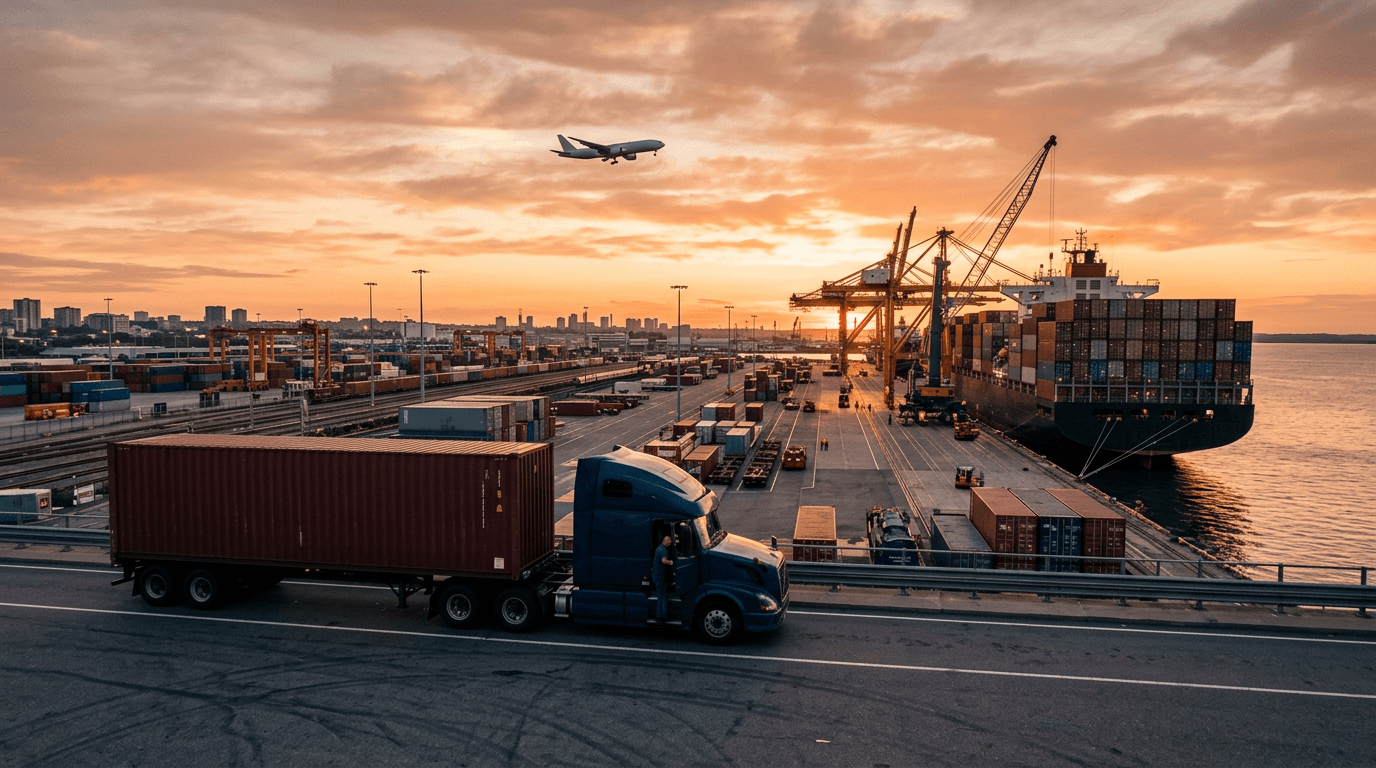
Example: How Incoterms Work in Practice
Suppose a company exports a shipment of goods from Novorossiysk to a port of destination, and the cargo then needs to be delivered by road to the recipient’s warehouse — meaning the route is multimodal: sea + road.
Under CIP Incoterms 2020: the seller pays for transport to the final destination (including both the sea and road legs) and insures the cargo for the entire journey. But the risk of loss or damage transfers to the buyer earlier — at the moment the seller hands the cargo over to the first carrier at the port of dispatch. In effect, the buyer formally bears the risk over most of the route, even though transport and insurance costs have already been paid by the seller.
If the parties had chosen FOB instead, this scheme would actually be legally incorrect for multimodal delivery “to the warehouse” — FOB only applies to the sea leg and assumes risk transfers at the moment of loading onto the ship at the port, not when handed over to the road carrier.
Nuances like this are a common reason why, for multimodal routes, we recommend clients agree on the choice of term with a logistics operator at the contract stage, not after the fact.
WestComTrans: Cargo Consolidation with Full Support
WestComTrans has been active in international logistics since 2014, specializing in customs clearance and container shipping. We organize consolidated shipments by sea, road, rail, and air, as well as multimodal routes with the optimal combination of transport types. We work with the seaports of Novorossiysk, St. Petersburg, and Vladivostok, as well as airport terminals.
Working with us, you get:
- a single operator for the entire route — no intermediaries and no fragmented accountability;
- full customs support for the shipment, including document verification at the shipment-building stage;
- door-to-door delivery with all related services arranged;
- timely updates at every stage of the shipment.

If you have any questions about the process of organizing container cargo transportation or would like to receive a consultation, feel free to contact us. We are ready to assist you at every stage of your cargo delivery!
WestComTrans – International Logistics.
Ответы на частые вопросы
No term was removed or added. The only renaming was DAT being replaced by DPU. Insurance requirements under CIP also changed (a broader coverage level is now required — Institute Cargo Clauses (A) instead of (C)), and the conditions for FCA regarding the issuance of a bill of lading with an on-board notation were clarified.
Yes. Older editions haven’t been discontinued and remain in use, so without specifying the year (“Incoterms 2020” or “Incoterms 2010”), interpretation of the terms may vary.
Mandatory insurance by the seller is only required under the CIF and CIP terms. In all other cases, the parties must agree on insurance separately and specify it in the contract.
It’s usually easier to start with group D terms (DAP, DPU, DDP) — most organizational matters, including transport and customs, fall on the seller.
No. Incoterms only fixes the allocation of costs and the transfer of risk. The moment ownership transfers needs to be specified separately in the sales contract.


