


 China
China India
India Vietnam
 Thailand
 Taiwan
 UAE
UAE Israel
 Indonesia
 Turkey
 Italy
Italy Egypt
Egypt Bangladesh
 Iran
Iran UK
UK Algeria
 Tunisia
 Spain
Spain Malaysia
 Morocco
 Saudi Arabia
 Singapore
 Philippines
 China
China UAE
UAE Japan
Japan South Korea
 Taiwan
 United Kingdom
 Brazil


Customs Clearance for Machine Tools and Production Lines
We handle customs clearance for industrial equipment at posts throughout Russia. We select the HS code, obtain an FCS classification ruling for lines arriving in multiple shipments, and deliver the cargo to your site — all under a single contract.
✔ HS code and payment calculation — before shipment, free of charge
✔ FCS classification ruling: a line of 5 shipments under a single code
✔ Over 10 years in the market
✔ We work throughout Russia and the EAEU
Specify the email address to which we will send the cost calculation.
We handle customs clearance of machine tools, industrial equipment, and technological lines at customs posts throughout Russia. We select the HS code based on technical documentation, calculate payments before shipment, obtain an FCS classification ruling for lines arriving in multiple shipments, oversee certification under EAEU technical regulations, and submit the declaration.
The key challenge in clearing production lines through customs is delivery in multiple parts. If each component is declared separately, they end up with different HS codes, different duty rates, and different clearance costs. We obtain the classification ruling in advance and declare the entire line under a single code as one product.
We’ve been working in international logistics for over 10 years. Clearance and transport run under a single contract: one provider, one zone of responsibility, no disconnect between the broker and the freight forwarder.
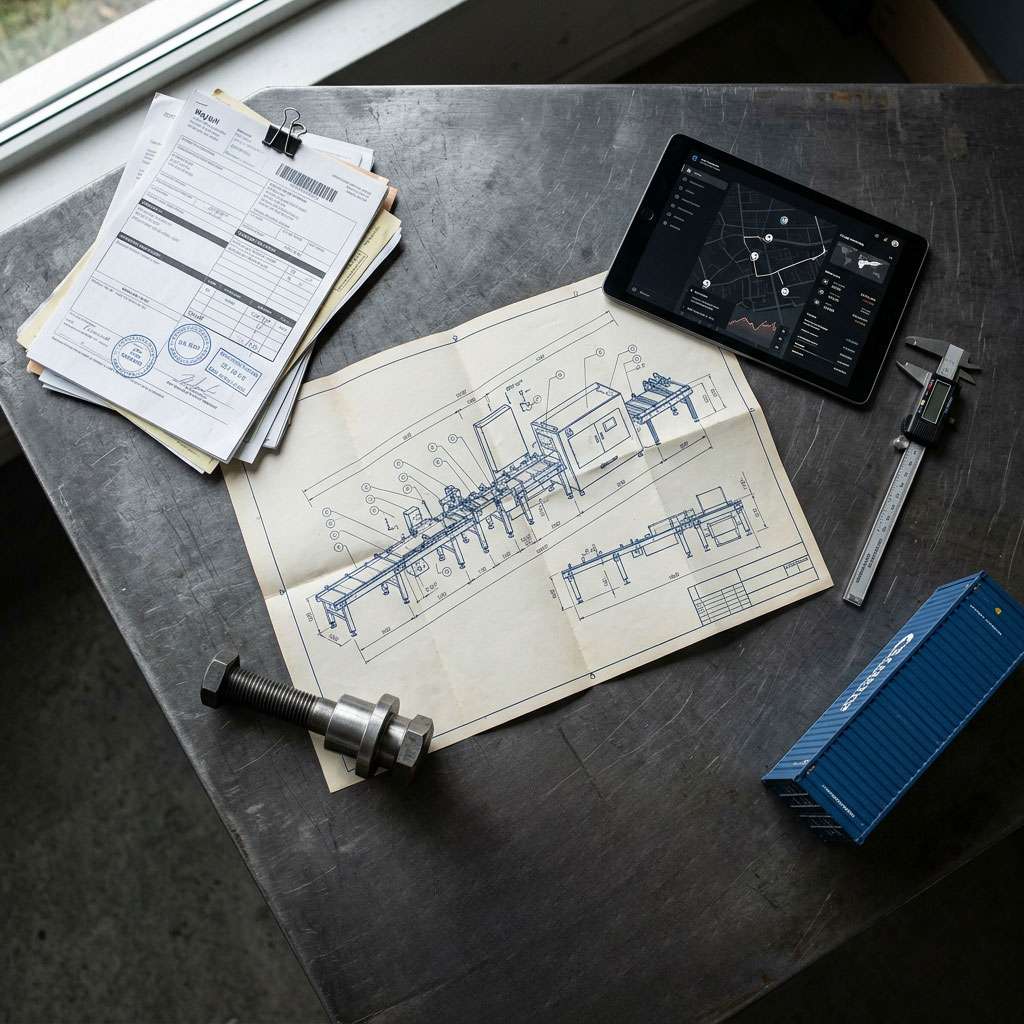
What We Handle
Metalworking Machine Tools
Lathes, milling machines, drilling machines, grinding machines, bending machines, CNC machines and machining centers, presses and shears.
Woodworking Equipment
Panel saws, edge banding machines, four-sided planers, drying kilns, processing lines for wood, cork, and rigid plastics.
Production and Technological Lines
Bottling, filling, and packaging lines, extrusion and pelletizing lines, conveyor systems — supplied whole or in separate shipments.
Foundry and Forging-Press Equipment
Melting furnaces, injection molding machines, plastic injection molders, press equipment.
Food and Pharmaceutical Equipment
Cooking kettles, reactors, dosing units, sterilizers, packaging and cleaning equipment.
Construction and Road-Building Machinery
Concrete batching plants, crushers, screening equipment, asphalt plants, tower cranes.
Instrumentation, Control Systems, and Industrial Automation
Measurement and control instruments, control cabinets, industrial robots and manipulators.
Spare Parts, Tooling, and Components
Individual assemblies, supplies according to specifications, large batches of consumables for equipment already imported.
HS Code for Machine Tools and Equipment
Industrial equipment mainly falls under two EAEU HS code groups: group 84 — reactors, boilers, mechanical devices, machine tools, pumps, compressors, furnaces; group 85 — electrical machines, motors, generators, transformers, control equipment.
The exact ten-digit code is determined by the machine’s purpose, operating principle, power, degree of automation, and the material being processed. The same wording in an invoice can correspond to several codes with different rates — so the code is selected not from the contract’s product name, but from the technical data sheet, drawings, and operating manual.
The cost of a classification error: customs assigns a different code with a higher rate, charges additional payments, and opens a case under Article 16.2 of the Administrative Offenses Code of the Russian Federation. Meanwhile, the cargo sits at the bonded warehouse (SVKh) at your expense.
| Equipment Type | HS Code |
|---|---|
| Machining centers | 8457 |
| Lathes | 8458 |
| Drilling, boring, milling machines | 8459 |
| Grinding, sharpening, honing machines | 8460 |
| Bending machines, presses, shears | 8462 |
| Woodworking machines | 8465 |
| Filling and packaging equipment | 8422 |
| Industrial robots, special-purpose machines | 8479 |
| Lifting and handling equipment | 8428 |
| Electric motors, generators, transformers | group 85 |
Send us the technical description — we’ll select the code and support it with documents the inspector will accept.
Customs Payments When Importing a Machine Tool
Three types of payments apply when importing equipment: import customs duty, VAT, and a customs fee for processing customs operations. The duty rate for most items ranges from 0 to 10% of the customs value, and VAT is charged at the standard rate of 22%.
Exemptions and VAT Relief
Technological equipment with no domestic analogues manufactured in Russia is exempt from VAT on import. The list of such equipment is approved by the Government of the Russian Federation and periodically updated — eligibility for the exemption is checked against the current version of the list before the declaration is submitted, not after.
Additional grounds for reducing payments:
- Preferential rates for goods from countries with trade agreements — confirmation of country of origin is required via a CT-1 certificate, Form A, or a declaration of origin.
- Equipment for the implementation of investment projects — subject to meeting the conditions of the relevant programs.
- Equipment for scientific research and medicine — under separate grounds.
We’ll check for free whether your machine qualifies for VAT exemption. For shipments from 3 million ₽, the savings amount to hundreds of thousands of rubles.
What’s Included in the Customs Value, and What Can Be Deducted
This question is almost always resolved after the contract has already been signed — and resolved not in the importer’s favor. We work through it in advance.
Increase the customs value:
- Transport costs to the EAEU border and loading/unloading operations — the amount of costs added depends directly on the Incoterms basis. Under EXW, all logistics from the factory are added; under CIF/CIP, most of this is already included in the price; under DAP to the border, almost nothing is added.
- Cargo insurance.
- License payments and royalties for CNC machine software, if their payment is a condition of the equipment sale. This is one of the most common reasons for additional charges when importing CNC machines and automated lines.
- The cost of tools, tooling, and materials provided by the buyer to the manufacturer.
May be deducted from the customs value:
- Costs of installation, assembly, supervision (chef-mounting), and commissioning of the equipment after import into the customs territory of the EAEU.
- Personnel training on operating the equipment.
- Maintenance after commissioning.
The condition for deduction is single but strict: these amounts must be listed as separate line items in the contract and invoice and documented accordingly. If supervision/commissioning costs are “baked into” the overall machine price, they cannot be deducted — you’ll pay duty and VAT on work that hasn’t even been performed yet. We review the contract before signing and advise on how to structure it.
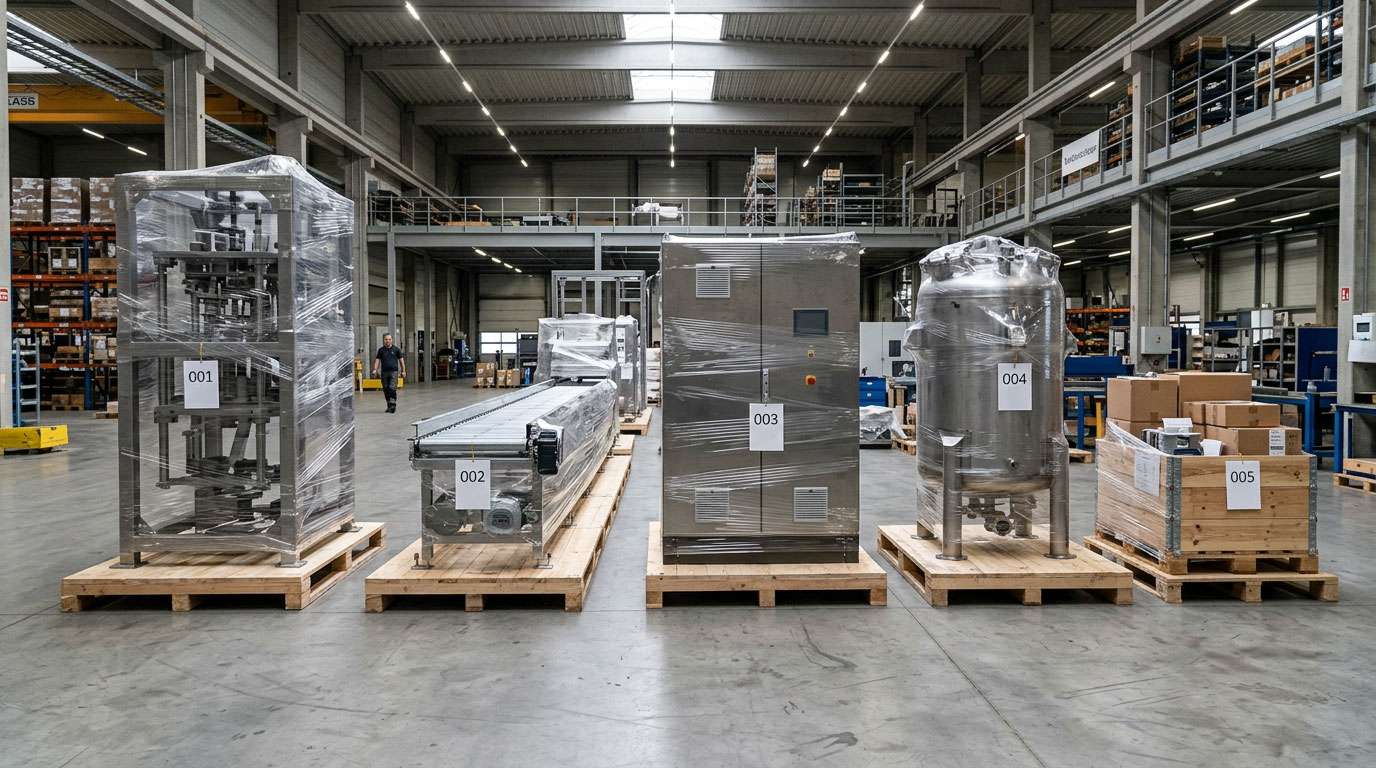
The Production Line Arrives in Parts: How to Clear It Under One Code
A technological line rarely arrives all at once. It’s usually 3–8 shipments, different vehicles, sometimes different modes of transport, and different arrival dates. If each shipment is declared separately, the following happens: the components get their own HS codes, some with a rate higher than that of the assembled line; the number of declarations and clearance costs increase; individual components may require their own permits.
EAEU legislation provides for a different procedure. Complete equipment moved in an unassembled or disassembled state is declared under a single classification code as one product. To do this, a classification ruling is obtained from the Russian FCS before shipments begin, and declarations for individual components are then submitted with reference to this ruling.
The costliest mistake you can make. The classification ruling must be obtained before the first shipment is imported. If the first component has already been declared under its own code, unified classification cannot be applied retroactively to the rest. The line “falls apart” into a dozen separate products, and restoring it to a single code is only possible through new deliveries or through the courts.
What’s needed to obtain the ruling: a complete list of components linked to their respective shipments, a technical description of the line as a single functional complex, assembly and installation schematics, drawings, and specifications for each shipment. The procedure takes time, so it’s planned at the same time as the contract is signed — not once the containers are already en route.
We prepare the full package and manage the process of obtaining the ruling, then support each shipment through to release — regardless of which port or post it arrives at.
Documents for Customs Clearance of Machine Tools
Basic package:
- foreign trade contract with appendices and specification;
- invoice, packing list, manufacturer’s price list;
- transport documents: CMR, bill of lading (B/L), or air waybill (AWB);
- export declaration of the country of dispatch;
- technical description, operating manual, drawings, and manufacturer’s catalogs;
- certificate or declaration of conformity under applicable technical regulations, or a letter of non-applicability;
- certificate of origin — if claiming preferences;
- documents confirming customs value, and payment documents;
- registration documents of the foreign trade participant, power of attorney.
Additionally for lines and used equipment: FCS classification ruling, assembly diagrams and component lists linked to shipments, the seller’s acquisition documents, a valuation report in cases of significant wear.
A detailed technical description and operating manual noticeably speed up release: the inspector doesn’t need to request additional information to verify the classification. If the manufacturer doesn’t provide a Russian version of the documentation, arrange in advance with the supplier who will cover the cost of technical translation.
What to send us for a calculation. Invoice or specification · technical description or a link to the manufacturer’s model · weight and dimensions · Incoterms delivery terms · country of origin. This is enough to determine the HS code and payment amount.
Machine Tool Supplies from China, Turkey, and Other Countries
China — the main sourcing country for machine tools and lines. Preferential duty rates apply when origin is confirmed. Requires close attention to technical documentation: Chinese manufacturers often provide incomplete descriptions, which can prevent the inspector from confirming the declared code. We request any missing data from the factory before shipment.
Turkey — metalworking, food, and packaging lines. Convenient in terms of timelines: by sea via Novorossiysk and by road.
India, Republic of Korea, Taiwan — CNC machines, equipment for light industry and food production. Timelines and completeness of documentation are generally better than from China.
We separately check for export restrictions: dual-use goods, equipment for oil extraction and processing, and equipment for scientific research. If an item falls under restrictions in the country of manufacture, we identify an acceptable supply channel or an alternative market — within the framework of current legislation.
Stages of Work
- Analysis. We study the contract, invoice, technical description, and drawings. We assess risks related to classification and customs value.
- Classification and calculation. We select the HS code, calculate payments, and check eligibility for exemptions. You see the final amount before shipment.
- Permits. We determine the applicable technical regulations and arrange for certificates or declarations of conformity to be obtained.
- Classification ruling — for lines and complete equipment. We prepare the package and submit it to the FCS before shipments begin.
- Delivery and placement. We arrange transport and process documents at the bonded warehouse (SVKh).
- Declaration submission. We prepare the customs declaration in advance, before the cargo arrives — this reduces the time between arrival and release.
- Release and pickup. We handle inspections if one is assigned, and arrange pickup from the warehouse without delay.
Delivery of Machine Tools and Production Lines
We don’t just handle clearance — we handle transport too. For the client, this means a single contract, a single point of responsibility, and no situation where the broker and carrier blame each other for a missed deadline.
- Container shipping by sea — the primary channel for machine tools from Asia.
- Oversized and heavy cargo: Flat Rack, Open Top, development of securing and unsecuring schemes, processing of permits for transporting oversized cargo.
- Project shipments of production lines: multiple shipments, different modes of transport, a unified schedule aligned with the requirements of the classification ruling.
- Multimodal schemes — sea, rail, road, and air in any combination.
- Door-to-door delivery, including unloading at the customer’s site.
If you have any questions about the shipping container transportation process or would like to get advice, do not hesitate to contact us. We are ready to help you at every stage of your cargo delivery!
WestComTrans is an international logistics company.
COST OPTIMIZATION

Optimization of clearance and freight costs

Savings on terminal services

Adjustment of customs value

Optimization of final costs
Specify the email address to which we will send the cost calculation
SERVICE

24/7 communication with manager

Deferred payment

We work with and without VAT

Electronic document flow

Correspondence with sender

No hidden fees

Cargo insurance

Full support from purchase to delivery
Specify the email address to which we will send the cost calculation
WE ARE ALREADY TRUSTED


REVIEW


Ответы на частые вопросы
Customs representative services are calculated individually. The final amount depends on the number of items and HS codes, the customs procedure, the need for certification, and obtaining a classification ruling. We calculate the cost based on the invoice and technical description.
Machine tools and industrial equipment fall under groups 84 and 85 of the EAEU HS code. For example: machining centers — 8457, lathes — 8458, drilling and milling machines — 8459, grinding machines — 8460, woodworking machines — 8465. The exact ten-digit code is determined by purpose, operating principle, power, and the material being processed, and is confirmed by technical documentation.
With a complete and correct set of documents, release takes 1–2 business days; with a declaration prepared in advance, it’s often done on the day of submission. The timeline increases if an inspection is assigned, technical documentation is requested, or customs value is reviewed.
A classification ruling must be obtained from the Russian FCS in advance — it allows complete equipment in an unassembled state to be declared under a single code as one product. The application is submitted before the first shipment is imported: unified classification cannot be applied retroactively once part of the components has already been declared separately.
Most often, TR TS 010/2011 “On the Safety of Machinery and Equipment” applies, along with TR TS 004/2011 and 020/2011 for electrical equipment, TR TS 012/2011 for explosive environments, and TR TS 032/2013 for pressure equipment. Confirmation is provided via a certificate or declaration of conformity. If no regulations apply, a letter of non-applicability is issued.


